Thailand Wins Backing of 62 Asia-Pacific Members for Bangkok Space Declaration
Thailand has gained broad regional endorsement for the Bangkok Declaration on the Use of Space for Sustainable Development in Asia and the Pacific. Fifty-three member states and nine associate members of the UN Economic and Social Commission for Asia and the Pacific (ESCAP) have backed the framework, which aims to expand cooperation on space technology and speed up progress toward the UN Sustainable Development Goals (SDGs).
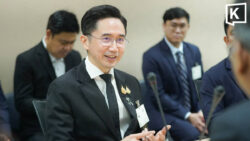
Deputy Prime Minister and Minister of Higher Education, Science, Research and Innovation Yodchanan Wongsawat addressed the fifth Ministerial Conference on the Use of Space for Sustainable Development in Asia and the Pacific, held at the United Nations Conference Centre in Bangkok. Thailand co-hosted the meeting with ESCAP, and the conference formally adopted the declaration as the guide for regional space cooperation through 2030.
Why it matters
Global progress on the SDGs is lagging, with an estimated 15–17% of targets likely to be met by 2030. The declaration calls for wider use of space technology and geospatial data to narrow development gaps and move progress forward. It also encourages practical use of advanced tools such as artificial intelligence, big data, cloud computing, quantum technology and satellite communications, while working to reduce technological disparities across the region.
The framework invites participation from private companies, startups, small and medium-sized enterprises, universities and research institutes. It supports voluntary data-sharing arrangements that respect national laws, along with common data standards so that different information systems can work together.
Better access to shared data is expected to strengthen disaster response, climate monitoring and environmental surveillance, while also supporting agriculture and food security.
The declaration will act as the guiding framework for the third phase of the Asia-Pacific Plan of Action on Space Applications for Sustainable Development, which covers 2026 to 2030. It will also steer regional cooperation ahead of the sixth ministerial conference in 2030.
From data to action
In his speech, Yodchanan said that combining optical satellites, radar satellites and AI has improved the monitoring of floods, droughts and transboundary haze. The real challenge, he stressed, is turning that information into decisions that give people practical help during emergencies.
He outlined a “3P” strategy for regional space cooperation:
- People: strengthening early-warning systems so communities can assess how disasters will directly affect them.
- Prosperity: building skills across the entire space value chain by linking universities, Thailand’s Geo-Informatics and Space Technology Development Agency (GISTDA) and industry.
- Partnership: connecting data systems across the region for deeper integration and cooperation.
Yodchanan argued that satellites should be judged not only by what they can observe, but also by the lives and livelihoods they help protect. “We must turn space technology into an economic engine,” he said, adding that sound science and interconnected systems will be essential for driving growth, strengthening disaster preparedness and promoting peace across the region.
The declaration also underscores Thailand’s continuing role in regional space cooperation. The country hosted the third ministerial conference in 2018, which helped pave the way for the action plan now in use.
Closing his remarks, Yodchanan said: “May space technology protect people, safeguard our planet, create prosperity, promote peace and strengthen our partnerships for generations to come.”